CIP/CIL/CIC circuits, pore engineering, and life-cycle economics—what really drives performance in the plant.
Published: Nov 08, 2025 • 7–9 min read • Certified: ISO 9001, ISO 14001, ISO 45001, GMP, HALAL & KOSHER Surface Area: 600–2000 m²/g Activation: Superheated steam at 1000 °C Feedstock: Coconut Charcoal Formats: GAC / PAC / Extruded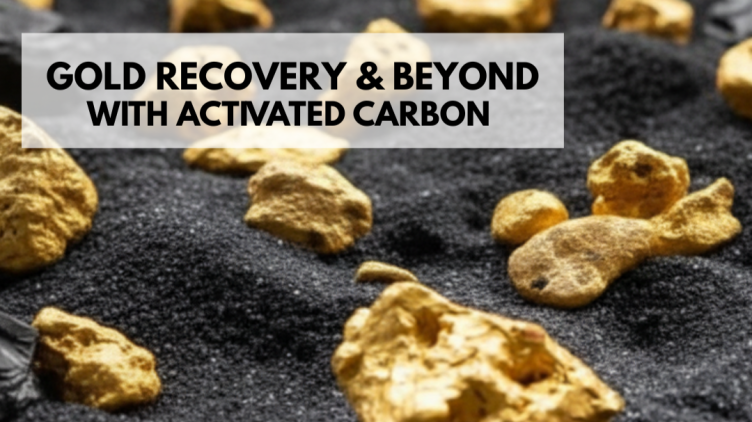 Steam Activated Carbon in CIP/CIL/CIC circuits for precious-metal recovery.
Overview
In gold hydrometallurgy, adsorption onto Steam Activated Carbon is the pivotal separation step converting dissolved Au(CN)2− into a high-value loaded solid. Carbure’s grades are engineered from Coconut Charcoal and activated with superheated steam at 1000 °C, yielding robust pore networks, high activity (≈600–2000 m²/g), and excellent hardness—critical for uptime in CIP/CIL and CIC circuits.
“Strong hardness and controlled pore-size distribution reduce breakage and fines—lowering gold losses and improving carbon life.”
CIP vs CIL vs CIC — Where Each Shines
- CIP (Carbon-in-Pulp): Slurry contacts carbon in consecutive tanks after leaching. Prioritizes attrition resistance and interstage screening compatibility.
- CIL (Carbon-in-Leach): Leaching and adsorption occur together. Requires fast kinetics and resilient macro-/mesopore access amid higher cyanide exposure.
- CIC (Carbon-in-Column): Clarified solution contacts packed carbon. Benefits from uniform particle size, low pressure drop, and high accessible surface area.
Across all three, stable hardness, low attrition, and consistent particle-size distribution lower carbon make-up rates and gold losses.
Kinetics vs. Equilibrium—Designing for Both
Gold loading capacity is governed by equilibrium (iodine number as a proxy) while time to target loading depends on kinetics, which is a function of pore architecture and particle size. Carbure tunes macropores (transport) and mesopores (adsorption fronts) to accelerate breakthrough curves without sacrificing ultimate capacity.
- Faster kinetics: Optimized macropore pathways reduce diffusion limitations in viscous slurries.
- High capacity: Balanced mesopore volumes maintain gold uptake at higher loadings.
- Right size: 6×12 or 8×16 mesh GAC are typical sweet spots for CIP/CIL; CIC often uses narrower cuts for column hydraulics.
Elution, Thermal Reactivation & Carbon Life
Proper elution restores active sites; thermal reactivation at controlled temperature regenerates the pore structure and reduces volatile compounds accumulated during operation. Our grades maintain hardness through multiple reactivation cycles, minimizing fines and improving circuit stability.
- Elution compatibility: Works with Zadra/Anglo and AARL schemes.
- Thermal stability: Maintains structure through repeated reactivation cycles.
- Lower total cost: Longer carbon life and fewer make-up additions reduce OPEX.
Beyond Gold—Industrial Adsorption Workhorses
The same Steam Activated Carbon backbone powers solvent recovery, VOC control, biogas cleanup (H2S/CO2 polishing), and mercury emission reduction—each requiring a tailored pore-size distribution and sometimes impregnation (e.g., sulfur, KI, or base treatments).
VOC Control Solvent Recovery Biogas Polishing Mercury ControlGrade Selection Guide
Use this quick guide to pick a starting grade. Our technical team can fine-tune specs for your ore, pH, cyanide strength, and residence time.
| Recommended Grade | Typical Use | Key Properties | Why It Works |
|---|---|---|---|
| GOLD CARB 60 (6×12 mesh GAC) | CIP/CIL primary adsorption | Iodine > 1100 mg/g, Hardness > 98%, Moisture < 5%, Ash < 4% | High activity, fast kinetics with robust hardness for low attrition. |
| GOLD CARB 60 (8×16) | CIC columns / solution polishing | Iodine > 1100 mg/g, Tight PSD for lower ΔP | Uniform hydraulics and fast mass-transfer in columns. |
| Acid-Washed Variant | Low-ash requirement circuits / sensitive processes | Ash reduced; soluble metals minimized | Improves purity and protects downstream elution/EMEW units. |
| Impregnated Grades | Mercury control, H2S removal | Specialty impregnants (e.g., S, KI, base) | Enhanced chemisorption for specific contaminants. |
FAQs
What iodine number should I target?
For most CIP/CIL circuits, ≥1000 mg/g is a reliable starting point. Pair with the right mesh and hardness for your residence time and screen design.
When should I consider acid-washed carbon?
When soluble ash/metal control is critical—e.g., sensitive elution or electrowinning setups—or when feed solutions carry interfering ions.
How do I reduce carbon losses?
Specify high hardness, verify PSD regularly, optimize interstage screens, and consider reactivation best practices to limit fines.